Private networking in Azure increases security, but it also comes with higher costs and greater architectural effort. We explain which risks are often overlooked and when private endpoints actually make sense.
Table of Contents
Private networking in the cloud enhances security, but it also introduces costs and significantly more complexity. This article shows how private endpoints affect architecture, performance, and flexibility.
ℹ️ Disclaimer: In this article, we use terminology from the Azure ecosystem. However, the underlying concepts apply to all major cloud providers. By private networking, we refer to all mechanisms that prevent cloud resources from being publicly accessible—such as private endpoints, private link, or VNet integrations.
Why Private Networking Reduces Flexibility and Speed
At first glance, it seems simple: remove public endpoints, add private endpoints—done. In practice, however, this approach removes exactly the freedoms that have made cloud projects fast, scalable, and flexible.
How strong the impact is depends, as always, on the project. Key questions include:
Which resources and services are required?
What does the expected usage look like?
Is there an experienced, centrally organized network team?
If your organization is required to use private networking, there is no room for flexibility. Still, it is important to understand the additional effort involved—especially since not all services support private endpoints or VNet integrations.
Network Design: Subnets, Routing, and DNS in Private Networking
For some resources, setting up a private endpoint is indeed straightforward—for example, for Container Registry, Key Vault, or Storage Accounts. Even then, however, this step requires a dedicated subnet. Other services, such as Container App Environments, require additional specialized subnets.
This triggers an entire chain of follow-up tasks: How large do the subnets need to be? How should the virtual networks be segmented? Which IP ranges are still available? And are routing and DNS properly configured? Especially with private endpoints, this leads to additional planning effort. These are questions we regularly encounter in Azure projects.
Many teams had deliberately left these topics behind when moving to the cloud. With public endpoints, integrating new services was easy and required no in-depth network design. Private networking brings all this complexity back and takes away much of the ease that has made cloud architectures so attractive.
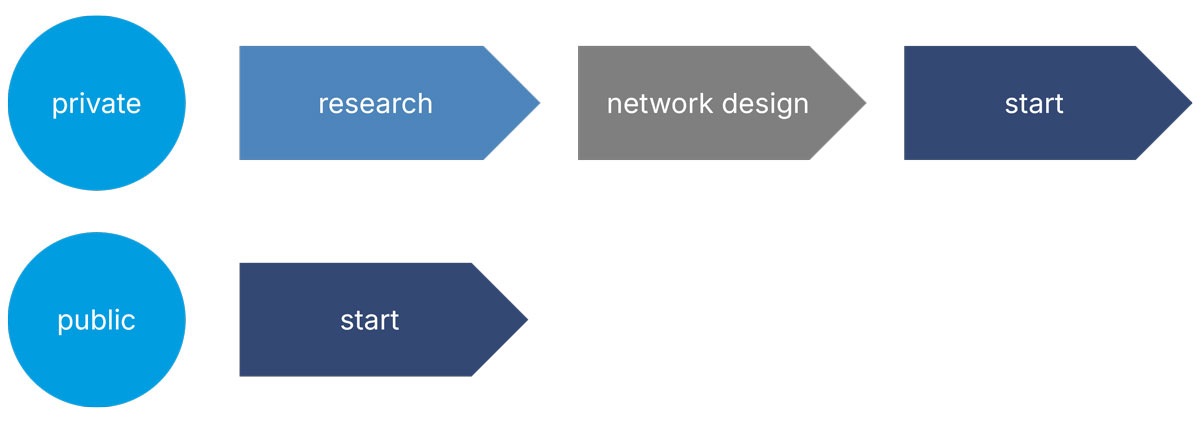
Private networking also means that you cannot get started immediately.
Impact on CI/CD: Internal Runners and Firewalls
Deployments also become more complex.
CI/CD pipelines automatically distribute software and provision infrastructure. Tools such as Azure DevOps or GitHub Actions are cloud services themselves. If your environment is no longer publicly accessible, this also applies to them.
As a result, runners must be set up within your own network, and additional firewall rules need to be maintained. This increases operational effort and turns what is normally a straightforward CI/CD process into a significantly more complex one.
Costs: Private Endpoints, DNS, Routing, and Premium SKUs
Private endpoints themselves already incur ongoing costs and therefore have a direct impact on cloud spending. Additional expenses arise from DNS and routing components, and in a multi-region architecture, these costs occur multiple times.
For some services, private networking also requires a higher pricing tier—for example, the “Premium” level of Azure Container Registry.
Azure API Management also provides different networking capabilities depending on the selected plan, such as:
Virtual Network integration,
Virtual Network injection, or
Private endpoints to the gateway.
Depending on the tier, costs range from approximately USD 150 to USD 2,800 per month. These differences are not specific to Microsoft but are typical for enterprise cloud services: more advanced networking options generally result in higher operational and architectural costs. That is exactly what this section is intended to highlight.
Increased Effort: Development, Operations, and Infrastructure as Code
Development effort increases significantly when using private endpoints. In our projects, we see between 30 and 80 percent additional effort—depending on the architecture—assuming the network configuration is already in place. Operational work and troubleshooting also remain more demanding.
Private networking requires additional resources to be provisioned. In our Infrastructure-as-Code modules, the private variant contains roughly twice as many lines as the version using public endpoints.
The decision to use private networking should be made early. Retrofitting it later is possible, but significantly more complex. This is precisely why a clear Cloud Transformation & Data Infrastructure strategy is so important.
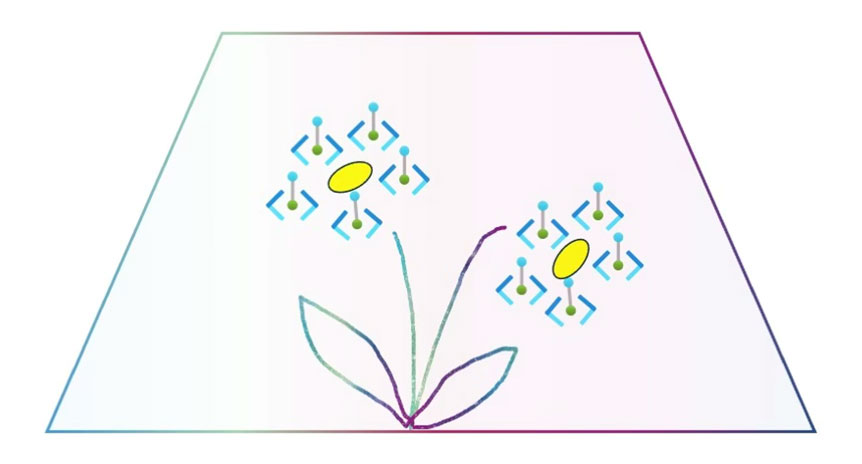
The private endpoint flower requires special care.
Security: More Isolation, but Not Automatically More Protection
If fewer actors can reach an endpoint, security increases—no question. However, what truly matters is the overall system. Network security should never be seen as a replacement for other protective measures. From a cloud security perspective, isolation is helpful, but it is only one building block.
Most attacks do not target the network itself but identities. Social engineering is one of the most common attack vectors, and many attacks originate internally. The idea of “no one can get in here” may feel reassuring, but it falls short.
True security emerges only from a holistic approach. Private networking is just one component. Essential factors remain zero-trust principles such as strong authentication (MFA, managed identities), least privilege and RBAC, segmentation with a small blast radius, regular patching, and comprehensive observability.
Private Networking? A Decision-Making Aid
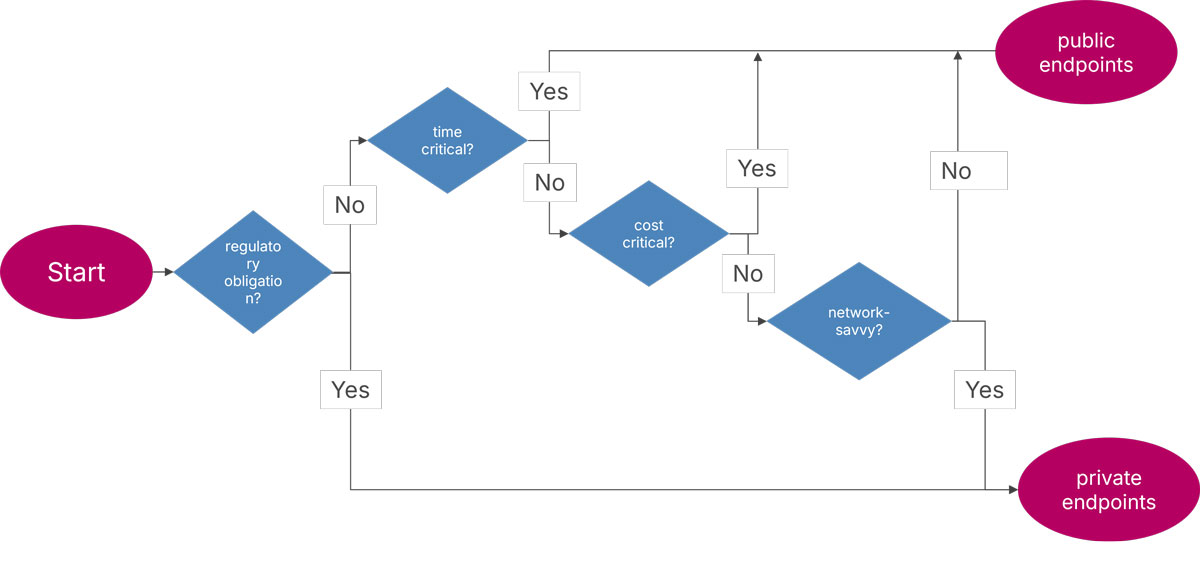
Private networking is the right choice for those who must use it—or who have sufficient time, budget, and expertise.
Private networking affects effort, costs, and architecture. A well-founded evaluation of requirements and services is essential. If you need support with assessment or implementation, we are happy to help.
Want To Learn More? Contact Us!
Your contact person
Arne Kaiser
Domain Lead Cloud Transformation & Data Infrastructure
Who is b.telligent?
b.telligent – that’s Data Analytics, AI, Customer Engagement, and Data Visualization. It’s Germany, Austria, Switzerland, and Romania. But most importantly, it’s our team: people with a true passion for data, working together to create innovative solutions that drive sustainable progress for businesses.
Which Azure IoT solution fits which scenario? This article compares IoT Hub, IoT Edge, and Azure IoT Operations—and explains why OT-centric data flows are becoming increasingly important for physical AI and modern production environments.
The Kubernetes SIG Network and the Security Response Committee have announced the end of support for Ingress NGINX. Until March 2026, one of the most widely used Kubernetes Ingress controllers will only receive best-effort support. Here is why you should take action now.