Composable CDP Native to Snowflake: More Than Just Zero-Copy

Composable CDP Native to Snowflake: More Than Just Zero-Copy

Which architecture is right for your business? Using Zeotap as an example, we explain the difference between zero-copy access and a native Snowflake integration.

Composable customer data platforms (CDPs) have long been more than a marketing term, but not every composable CDP works the same way. Some access a company’s Snowflake data via zero-copy, while others run entirely natively within the company’s own account. Using Zeotap as an example, this article explores what distinguishes these approaches from both a technical and strategic perspective. By the end, you will understand which architecture is best suited to which use case—and what to consider during procurement.

Table of Contents

Two Paths to the Same Customer Data Platform (CDP)

For several years, composable CDPs have been the alternative to traditional packaged solutions: Instead of copying customer data into another proprietary database, the CDP works directly on the company’s data warehouse—typically Snowflake, BigQuery, or Databricks. Snowflake has emerged as a preferred platform, with CDP providers integrating with it to varying degrees of depth.

Using Zeotap, the European composable CDP with German roots, as an example, we will illustrate how these two approaches differ. Zeotap now offers two deployment models for the same platform: as a Native App directly within the customer’s Snowflake account or as a SaaS solution that accesses Snowflake data via zero-copy from its own Google Cloud Platform (GCP) environment. Both options are based on the same code base, product logic, identity resolution engine, segmentation, and journey orchestration. However, they differ significantly in where this logic is executed and how data is accessed—and, consequently, in procurement, governance, and strategic dependency. Understanding these differences is essential before choosing a CDP architecture.

Packaged and Composable: Two CDP Deployment Models

A traditional packaged CDP fully copies customer data into the provider’s own, usually proprietary, cloud environment. Depending on the use case, a composable CDP with zero-copy access avoids this duplication and instead reads and writes directly in the customer’s warehouse. However, the CDP typically retains its own processes for job orchestration, the identity resolution engine, and the data event stream in its SaaS environment. A native composable CDP approach goes one step further: It moves not only the data but also the entire control plane into the customer’s account—technically, in Snowflake, through Native Apps based on Snowpark Container Services.

Zeotap refers to this flexibility as “InfraFlex”: Customers choose the same product but different deployment models, depending on what matters most to them—IT simplicity and compliance or maximum warehouse independence.
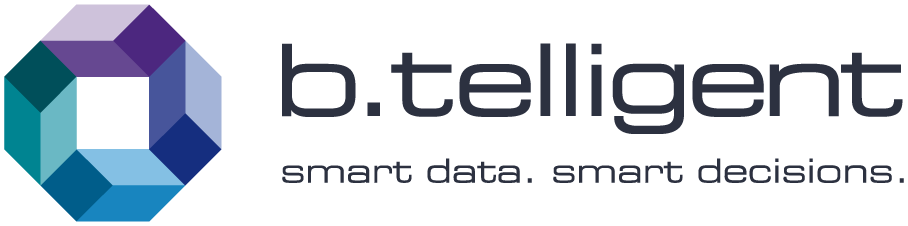
Comparison of two CDP architectures: native Snowflake solution and external Zeotap CDP with zero-copy
Fig.: Simplified comparison of the two deployment models

Architecture A: Zeotap Native to Snowflake

When Zeotap runs as a Native App, the entire platform operates within the customer’s Snowflake account, including identity resolution, profile creation, segmentation, journey orchestration, and AI agent capabilities. This approach moves not only the compute workload but also the entire control plane—including job orchestration, secrets, and metadata storage—into the customer’s account. That is a much more comprehensive approach than competitors that currently operate only selected functions natively.

Key Benefits

  • Faster Procurement: Snowflake has already been approved by compliance and information security teams at most customers, turning “we are evaluating a new provider” into “we are enabling an additional module.” Zeotap itself says this can reduce procurement cycles from quarters to days. This is particularly relevant in highly regulated industries such as banking, insurance, telecommunications, and healthcare.
  • No Data Transit: The brief data flow through the provider’s systems that is otherwise common for external activations is eliminated entirely because no account boundary is crossed.
  • Inherited Governance: Row access policies, masking, and role-based access controls automatically apply to the CDP as well, rather than having to be recreated in a second system.
  • Procurement Synergies: Consumption is billed through the existing Snowflake invoice and often counts toward existing spend commitments.

Key Considerations

  • Tighter Cloud Dependency: Organizations that have not yet made a final decision in favor of Snowflake or that operate multiple warehouses in parallel sacrifice architectural flexibility.
  • The Independence Question: When a cloud provider integrates a CDP vendor this closely into its platform, as Snowflake and Zeotap have done, it raises a valid question about the independence of the product roadmap. It also becomes more difficult to compare costs across providers when consumption is consolidated on the same invoice.
  • Warehouse Maturity Required: Governance gaps in a customer’s Snowflake setup directly affect the CDP.
  • Real-Time Still Means Real-Time: “Native” does not mean every request runs live against the warehouse. For low-latency use cases—under one second—such as website personalization, Zeotap also maintains a high-performance caching layer.

Architecture B: Zeotap External (GCP) With Zero-Copy Access

When Zeotap runs as a standard SaaS solution—by default, in its own Google Cloud environment—the platform accesses data in the warehouse via zero-copy, regardless of whether the warehouse is based on Snowflake, BigQuery, or Databricks. A brief data flow occurs only at the point of activation, when an audience is delivered to a channel through Zeotap’s proprietary connector.

Key Benefits

  • Full Warehouse Agnosticism: The same architecture works without modification for Snowflake, BigQuery, and Databricks customers. This is relevant when a data cloud strategy has not yet been finalized or when multiple platforms are used in parallel.
  • Faster Product Cycles: Because the control plane is outside individual customer accounts, the provider can roll out new features more consistently instead of updating each account separately.
  • The Single Source of Truth Remains Intact: Data remains in the warehouse, even if selected data sets are cached for performance reasons.
  • Well Suited to System Purism: This model is appropriate for organizations that deliberately prefer a clear separation between data storage and application logic.

Key Considerations

  • Minimal Data Transit: It exists technically but is usually not an issue in practice. For especially stringent compliance requirements, however, it may still be a disqualifying factor.
  • Governance Must Be Maintained in Two Places: Access rules must also be maintained or mirrored in the external system rather than being inherited automatically.
  • Physical Limits for Real-Time Use Cases: Pure zero-copy logic reaches its limits when real-time performance is required. Here too, a local cache remains necessary.

Which Architecture Is Right for You?

In practice, three questions usually determine which model is right for an organization:

  1. How mature is the customer’s data warehouse? Only a clearly structured Snowflake setup with robust governance allows a native integration to fully deliver on its benefits. Otherwise, weaknesses in the warehouse are carried over directly into the CDP.
  2. Is the data cloud decision strategic and long-term? Organizations that have made a clear, long-term commitment to Snowflake benefit most from the native option. Those pursuing multiple paths or intentionally keeping their warehouse choice open are better served by the warehouse-agnostic zero-copy model.
  3. How critical are compliance and data residency requirements? If regulations require assurance that data never leaves the organization’s own account, native integration is clearly the better choice. In all other cases, the minimal transit that occurs during activation is usually permissible.
  4. Regardless of the chosen architecture, one limitation remains: For strict real-time requirements, both models need a cached layer close to the application, which is no longer purely zero-copy. This is not a weakness of either architecture; it is simply a physical limitation of zero-copy access.

The Procurement Advantage

For organizations that want to use Zeotap and are already Snowflake customers, purchasing through the Snowflake Marketplace offers both financial and organizational advantages: The software is often already considered internally approved, reducing security and compliance assessments to a minimum. Costs are consolidated on the existing Snowflake invoice and can frequently be applied toward existing spend commitments. This supports procurement teams and simplifies budget discussions. Purchasing software through an established contractual framework also reduces the number of vendor and contract relationships that need to be managed separately.

However, this benefit should be weighed against the drawback mentioned earlier: As a growing share of MarTech spending is consolidated on the Snowflake invoice, comparing actual CDP costs across providers becomes more difficult. An organization’s negotiating position with individual vendors may also shift when the commercial relationship is driven more by the data cloud platform than by the CDP provider itself.

Conclusion

Neither architecture is inherently “better.” Both solve the same problem, but with different priorities. Native integration is compelling where Snowflake is already the strategic data cloud, compliance requirements are high, and procurement speed matters. The external zero-copy option, on the other hand, is the better choice when warehouse independence, faster product cycles, or an undecided cloud strategy are the priority.

Before addressing this question, however, there is another important consideration: Does the organization actually need a CDP—and if so, what requirements must it meet? This is precisely where our consulting services come in: at the intersection of requirements, architecture, and the vendor landscape. We are also currently developing a comparative market overview of AI capabilities in customer data platforms, which we will publish here as well.

Are You Considering Which CDP Architecture Is Right For Your Business?

Whether you are evaluating native integration, zero-copy access, or first determining whether a CDP is the right building block at all, feel free to contact us. Let’s discuss your requirements, architecture, and the vendor landscape—without obligation. Together, we will find the right solution for you.

Want To Learn More? Contact Us!

Sebastian Amtage

Your contact person

Sebastian Amtage

Founder and Managing Director

Außenansicht eines Bürogebäudes von b.telligent

Who is b.telligent?

b.telligent – that’s Data Analytics, AI, Customer Engagement, and Data Visualization. It’s Germany, Austria, Switzerland, and Romania. But most importantly, it’s our team: people with a true passion for data, working together to create innovative solutions that drive sustainable progress for businesses.

Related Posts

chevron left icon
Previous post
Next post
chevron right icon

No previous post

No next post